
A gem with many shades
Garnet refers to a group of minerals with varying chemical compositions but identical crystal structures. Known for its rich colours, it has been used in ornamentation since ancient times and remains a prized stone in jewellery today. Far from being limited to the dark red hue with which it is often associated, garnet comes in a multitude of varieties, offering a surprisingly wide range of colours.

Origins and geological characteristics of garnet
Scientifically speaking, garnet belongs to a group of minerals called silicates, which share the same crystal structure. It forms naturally deep within the Earth, where heat and pressure are very high, particularly during rock transformations (known as metamorphic rocks). It is also found in certain volcanic rocks. Garnet crystals often have a well-defined geometric shape, like a dodecahedron (a 12-sided ball), which sometimes makes them visible to the naked eye in their original rock.
Its hardness varies between 6.5 and 7.5 on the Mohs scale, making it a sufficiently durable stone for everyday use in jewellery. Its density and relatively high refractive index give it a beautiful shine.

A large family: the main varieties of garnet
Garnet does not refer to a single stone, but rather a family of several mineral species and subspecies. These differ in their chemical composition and therefore in their colours and optical properties. Here is an overview of the different garnets you can find in our Lepage creations:
Almandine and pyrope: the two faces of red garnet
Among red garnets, almandine and pyrope are the most iconic. Almandine, rich in iron, offers shades ranging from dark red to purplish red. Widely used in jewellery, it is mined mainly in India, Madagascar and Tanzania, and sometimes cut into cabochons to reveal an asterism. Pyrope, which is rarer, captivates with its bright, vivid red colour. Also known as ‘Bohemian garnet’, it is often very pure, with no visible inclusions. Its brilliance and intense colour make it a highly prized stone for elegant designs.

Spessartite garnet: the warm glow of orange
This variety is distinguished by its colour ranging from bright orange to deep red-orange. The most saturated and luminous spessartites are sometimes referred to as ‘mandarin garnets’ and are highly prized in fine jewellery. Spessartite offers excellent dispersion, i.e. a strong ‘fire’, with colour flashes visible to the naked eye.

Grossular garnet: a soft palette with multiple shades
Grossular garnet is distinguished by its wide variety of colours, ranging from pale green to golden yellow, with brown tones and even colourless varieties. Some stones, rich in iron, display a delicate light green colour, softer and less saturated than that of tsavorite, but just as charming. One of the best-known varieties is hessonite, recognisable by its orange to warm brown colour, which is highly prized in traditional jewellery in India and Sri Lanka. Appreciated for its transparency and subtlety, grossular naturally finds its place in refined, understated jewelry designs or those inspired by the colours of nature.

Royal Purple Garnet: rare and charming purple
This relatively rare type of garnet is prized for its rich colour and brilliance, making it a sought-after gemstone in high-end jewellery designs. Its name is more commercial than scientific, as structurally it is a mixture of several different varieties of garnet. It is generally a hybrid garnet, most often a combination of pyrope and almandine, sometimes enriched with spessartite. This chemical mixture gives rise to intermediate colours, including this deep purple that recalls the name ‘Purple Royal’.

Tsavorite garnet: a brilliant green with a precious freshness
Discovered in Kenya in the 1960s, tsavorite is one of the most precious varieties of garnet. Its bright green hue makes it a rare and sought-after gem. It owes its colour to the presence of vanadium and chromium in its chemical composition. Highly lustrous and often very pure, tsavorite captivates with its visual freshness and crystalline brilliance. It rivals emerald, but is more affordable.

Garnet is much more than just a red stone. It represents a complex and fascinating family of minerals, whose geological richness translates into astonishing aesthetic diversity. Versatile, durable and often accessible, it appeals to rare stone enthusiasts and jewellery designers seeking originality alike. By rediscovering the many faces of garnet, contemporary jewellery is paying tribute to a long-underrated stone that is now back in vogue and will continue to feature in our creations!
Pour aller plus loin
Actualités similaires

Jewellery as a language of Love
Choosing a gift is never insignificant. It is not the object itself that matters, but what it expresses — with precision and restraint. February...
Lire l'article
Winter lights: when jewelry reveals the magic of Christmas | Lepage
Christmas is that gentle pause in time when we return to what truly matters, when we celebrate bonds, memories and cherished reunions. In this...
Lire l'article
From past to present, Suzanne spans generations
Inspired by heirloom pieces, the Suzanne collection celebrates timeless elegance through modern, thoughtful creations—made to last and to be...
Lire l'article
The hallmark: a discreet but essential guarantee
In the world of jewellery, every detail counts. A quality piece of jewellery is not only recognisable by sight or touch, but also by its less...
Lire l'article
The Colette Coussin: every mum deserves a medal
For Mother's Day, discover the new Colette Coussin medals in 18k gold, adorned with precious and fine stones.
Lire l'article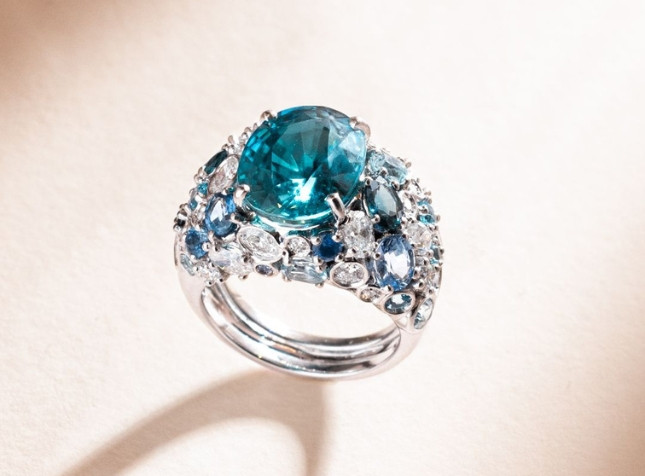
Zircon: the age-old sparkle of an unsung stone
Discreet, luminous, infinitely ancient: zircon is a semi-precious stone that appeals to connoisseurs for the richness of its reflections and the...
Lire l'article
How to choose your wedding ring ?
Choosing a wedding ring is an important decision that symbolises commitment and love. Discover our advice on the key steps to choosing the perfect...
Lire l'article
Personalized jewelry: the art of engraving an emotion
A piece of jewelry is much more than just an accessory: it tells a story, captures a memory and symbolizes an emotion. Thanks to engraving, each...
Lire l'article
The 4Cs of diamonds : Cut Purity Colour Carat
At Lepage, each diamond is carefully selected according to the 4Cs: Carat, Colour, Clarity and Cut. These criteria determine its beauty, rarity...
Lire l'article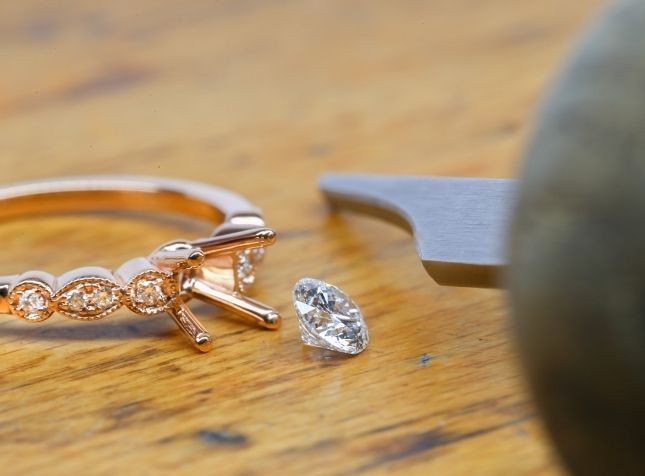
All you need to know about setting stones
Setting stones is a fundamental element in jewellery design, ensuring both the safety and beauty of the stones. Discover the different setting...
Lire l'article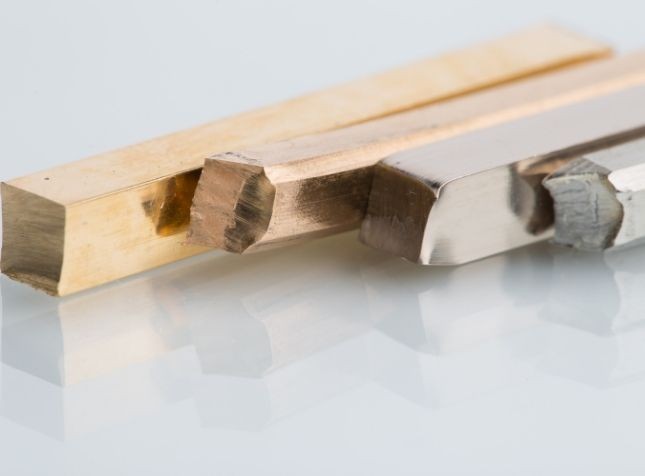
Precious metals in jewellery: complete guide
Gold and platinum, symbols of elegance and durability, are at the heart of Lepage creations. Selected for their timeless brilliance and...
Lire l'article